
Sorigin Recycling
Specialized in waste recycling machinery

What are the processing steps in an aluminum-plastic recycling plant?
An aluminum-plastic recycling plant is a specialized facility for processing waste aluminum-plastic composite
materials. It does not use chemical methods, but rather employs crushing, grinding, and physical separation
technologies to efficiently separate aluminum powder and plastic powder.
Uses of the final products (aluminum powder and plastic powder):
The separated materials can be reused. Aluminum can be used in metallurgical and industrial applications,
while plastic can be used in manufacturing or as an additive.
Working principle and process:
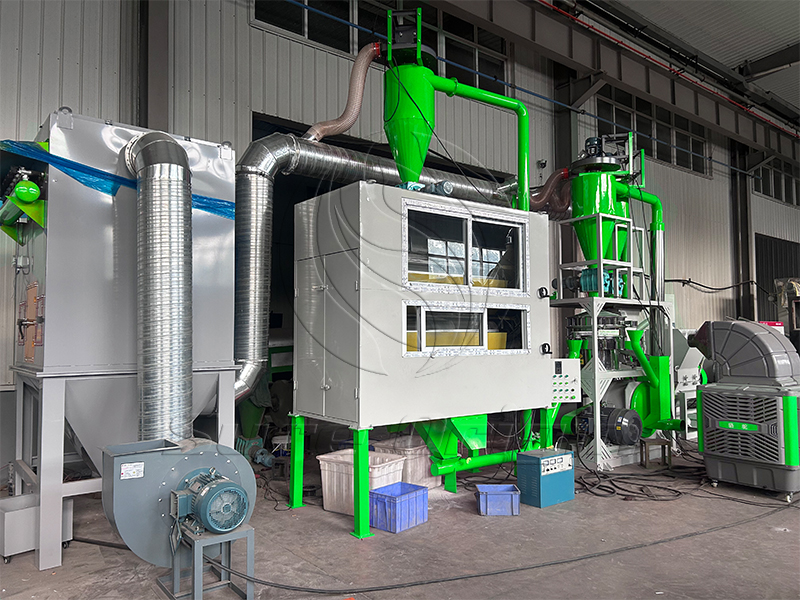
A typical recycling production line includes the following steps:
1- Feeding
Waste aluminum-plastic materials (such as pharmaceutical blister packaging or composite panels) are fed
into the machine via a conveyor belt.
2- Crushing
The material is crushed into fine fragments by a crusher, exposing the aluminum and plastic layers.
3- Grinding and pulverizing
A high-speed grinder further grinds the material into fine particles, ensuring complete separation of aluminum
and plastic.
4- Airflow separation (gravity separator):
The gravity separator has two outlets (one for aluminum and one for plastic), utilizing density differences to
separate the lighter plastic particles
from the heavier aluminum powder.
5. Electrostatic Separation (High-Voltage Electrostatic Separator):
When particles pass through an electrostatic field, conductive materials (such as metals) discharge rapidly and settle,
while non-conductive materials (such as plastics, resins, or rubbers) retain their charge and are adsorbed onto the
collection plate. Electrostatic separators utilize the difference in conductivity between aluminum and plastics
to improve purity.
Dust Removal
Integrated dust removal systems prevent particulate matter emissions, ensuring a clean and environmentally
friendly operating environment.
Advantages of Aluminum-Plastic Recycling Machines:
High Separation Efficiency
Aluminum recovery rates can reach 98% or higher.
Environmentally Friendly
No combustion or chemical treatment is required, avoiding toxic emissions.
Economical Benefits
Both recycled aluminum and plastics have market value, making recycling profitable.
Versatility
Can process various aluminum-plastic composite materials, including pharmaceutical packaging, aluminum foil laminates
and decorative panels.
Automation and Safety
Equipped with an advanced control system, it is easy to operate, has a stable design, and requires minimal manual labor.
PRODUCT
- Mini Copper Wire Recycling Machine
- Scrap Copper Cable Wire Recycling Machine
- Scrap PCB Boards Recycling Machine
- PCB Dismantling Machine
- Aluminum Plastic Separation Machine
- Copper Aluminum Radiator Seprator
- Electrostatic Separator
- Eddy Current Separator
- Metal Crusher
- Air Gravity Separator
- Lithium-Ion Battery Recycling Plant
- Electromator Stator Seperator
Leave Message